Introduction to Sleep and Health
What is Sleep?
Sleep is a natural biological process that allows the body and brain to rest, recover, and prepare for the next day. While people often think of sleep as simply “switching off”, the brain remains extremely active during sleep.
During sleep, the body cycles through different stages, including light sleep, deep sleep, and REM sleep. Each stage plays a specific role in maintaining both physical and mental health.
Why Sleep is Important
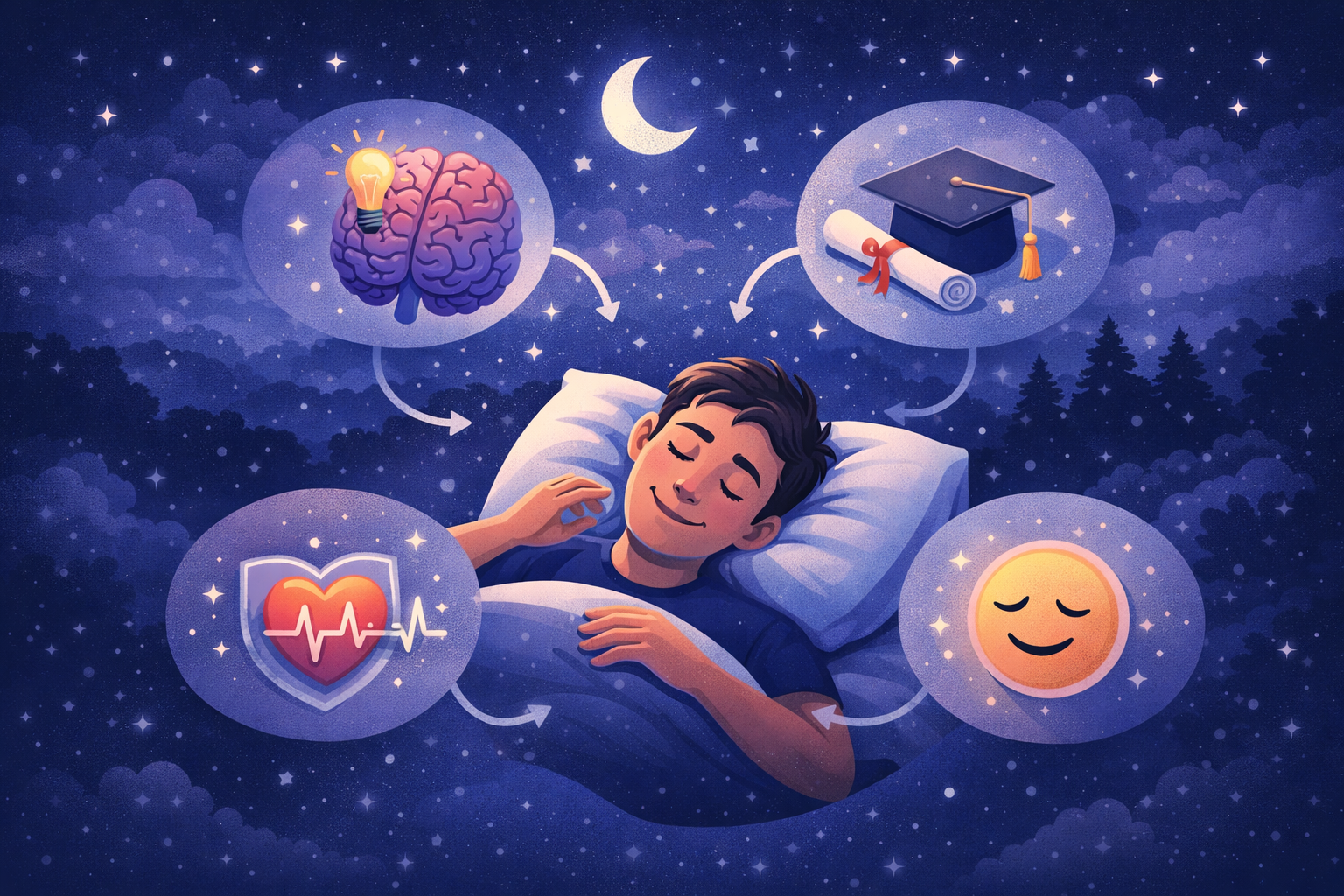
Sleep is essential for maintaining the normal functioning of the body. During sleep, the brain processes information gathered throughout the day, strengthens memories, and helps organise new knowledge.
This is why sleep plays an important role in learning and memory retention. Students and professionals who get enough sleep are more likely to perform better in tasks that require focus, decision-making, and problem-solving.
Physical Benefits of Sleep
In addition to its effect on the brain, sleep also supports the body physically. During deep sleep, the body repairs damaged tissues, builds muscle, and releases hormones that support growth and development.
Sleep also plays a key role in maintaining a healthy immune system. When the body is well-rested, it is more capable of fighting infections and recovering from illness.
Mental and Emotional Benefits
Sleep is closely linked to mental health and emotional wellbeing. A lack of sleep can increase stress levels, reduce emotional control, and contribute to anxiety and depression.
Getting enough sleep helps regulate mood, improve emotional stability, and support overall mental clarity. This is particularly important for individuals managing academic or work-related stress.
Modern Sleep Problems
Despite the importance of sleep, many people do not get enough rest. Modern lifestyles often involve long work hours, academic pressure, social media usage, and excessive screen time.
Exposure to screens before bedtime can reduce the production of melatonin, a hormone that helps regulate sleep. This can make it harder for individuals to fall asleep and maintain a consistent sleep schedule.
Effects of Sleep Deprivation
Sleep deprivation has become increasingly common in modern society. When people consistently fail to get enough sleep, they may experience:
- Fatigue and low energy levels
- Reduced concentration and focus
- Memory problems
- Irritability and mood swings
- Increased stress levels
Long-term sleep deprivation can also increase the risk of serious health conditions including heart disease, diabetes, obesity, and weakened immune function.
Purpose of This Website
This website aims to provide useful and accessible information about sleep and its importance for overall health. It explores topics such as why sleep is important, how sleep cycles work, common sleep disorders, and practical strategies for improving sleep quality.
By learning more about sleep and how it affects the body and brain, individuals can develop healthier sleep habits that support their overall wellbeing, productivity, and long-term health.