Sleep Disorders
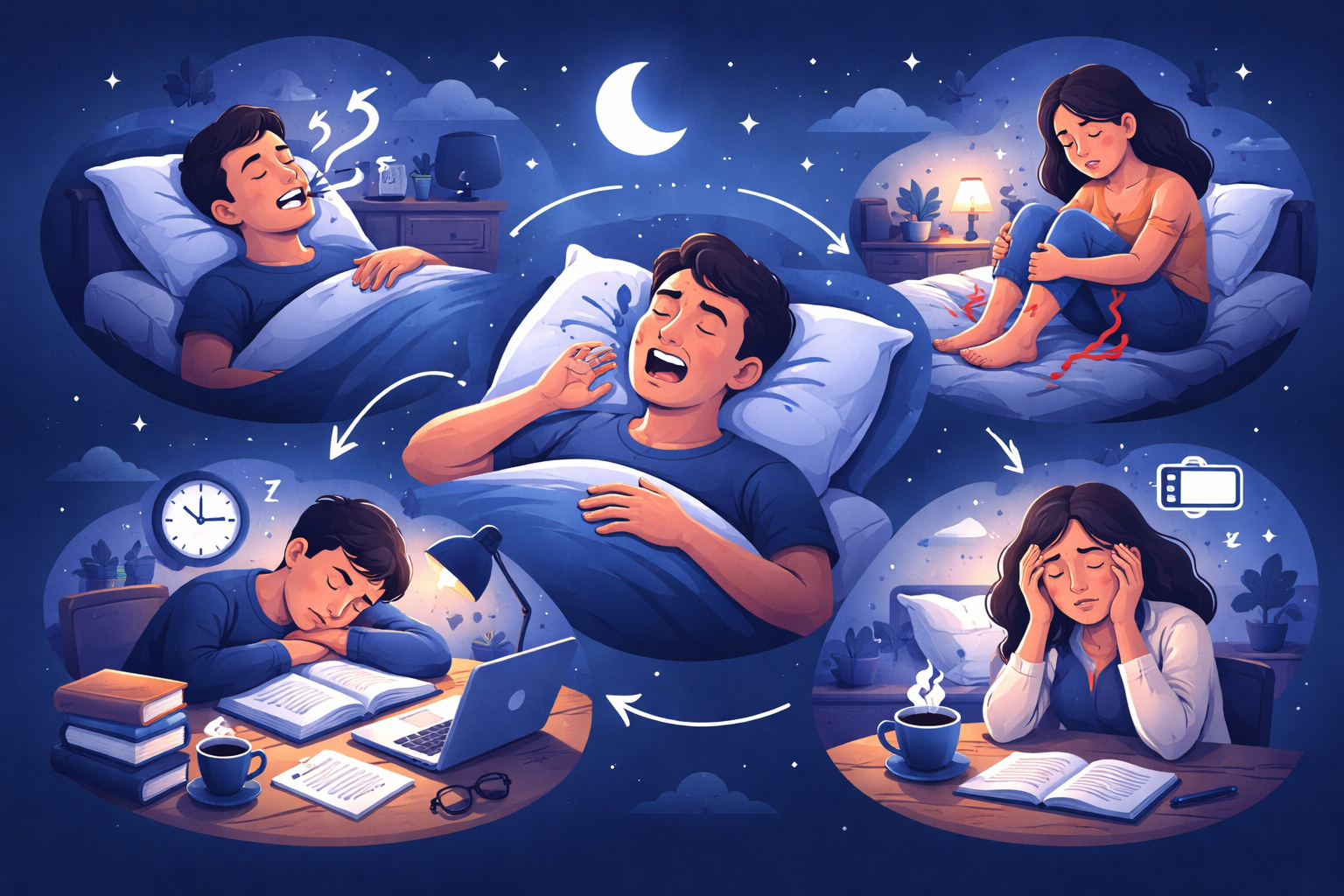
What Are Sleep Disorders?
Sleep disorders are conditions that interfere with a person’s ability to sleep properly. These disorders can affect the ability to fall asleep, stay asleep, or achieve restful sleep.
Insomnia
One of the most common sleep disorders is insomnia. Insomnia occurs when individuals struggle to fall asleep or wake up frequently during the night.
Insomnia can be caused by stress, anxiety, irregular sleep schedules, or excessive screen usage before bedtime. Over time, it can significantly affect energy levels, concentration, and overall wellbeing.
Sleep Apnea
Another common sleep disorder is sleep apnea. Sleep apnea occurs when breathing repeatedly stops and starts during sleep.
This condition is often associated with loud snoring and interrupted sleep. Individuals with sleep apnea may wake up feeling tired even after sleeping for several hours.
Restless Leg Syndrome
Restless leg syndrome is another condition that can interfere with sleep. This disorder causes uncomfortable sensations in the legs and an uncontrollable urge to move them, particularly during periods of rest.
These sensations can make it difficult for individuals to fall asleep and stay asleep throughout the night.
Narcolepsy
Narcolepsy is a sleep disorder that affects the brain’s ability to regulate sleep and wake cycles.
People with narcolepsy may suddenly fall asleep during the day, even during activities such as talking or eating, which can be dangerous and disruptive to daily life.
Sleep Deprivation
Sleep deprivation is also a major issue affecting many people. It occurs when individuals consistently fail to get enough sleep.
Over time, sleep deprivation can lead to reduced concentration, memory problems, weakened immunity, and an increased risk of chronic health conditions.
Common Effects of Sleep Disorders
- Difficulty concentrating
- Low energy and fatigue
- Memory problems
- Increased stress and irritability
- Higher risk of long-term health issues
Treatment and Management
Many sleep disorders can be improved through lifestyle changes, better sleep habits, and medical treatment where necessary.
Maintaining a consistent sleep schedule, reducing screen time before bed, and creating a comfortable sleep environment can help improve sleep quality.